1. Beyond the Blending Wall: The Roadmap to E27 and E85
The global shift is moving toward High-Octane Substitution. While most current vehicles handle E20 seamlessly, the future relies on a phased takeover:
♦ The Immediate Jump E20 to E27: With a current national capacity of 2,000 crore litres, India has an immediate surplus. AIDA is actively pushing for a jump to E27 and E30 blending targets by 2030 to absorb this production.
♦ The Flex-Fuel Future: To replace petrol significantly, we are moving toward E85 85percentage ethanol. Manufacturers like Maruti Suzuki are already preparing the Fronx FFV for a 2026 launch, specifically designed to treat petrol as the secondary fuel.
2. The Chemistry of Performance: Why Ethanol is the Superior Fuel
Replacing petrol is not just an environmental choice; its a performance upgrade.
♦ The Octane Advantage: Standard petrol typically has an octane rating of 91. Pure ethanol boasts a rating of 108.5. This higher octane allows for higher engine compression, reducing knocking and improving acceleration.
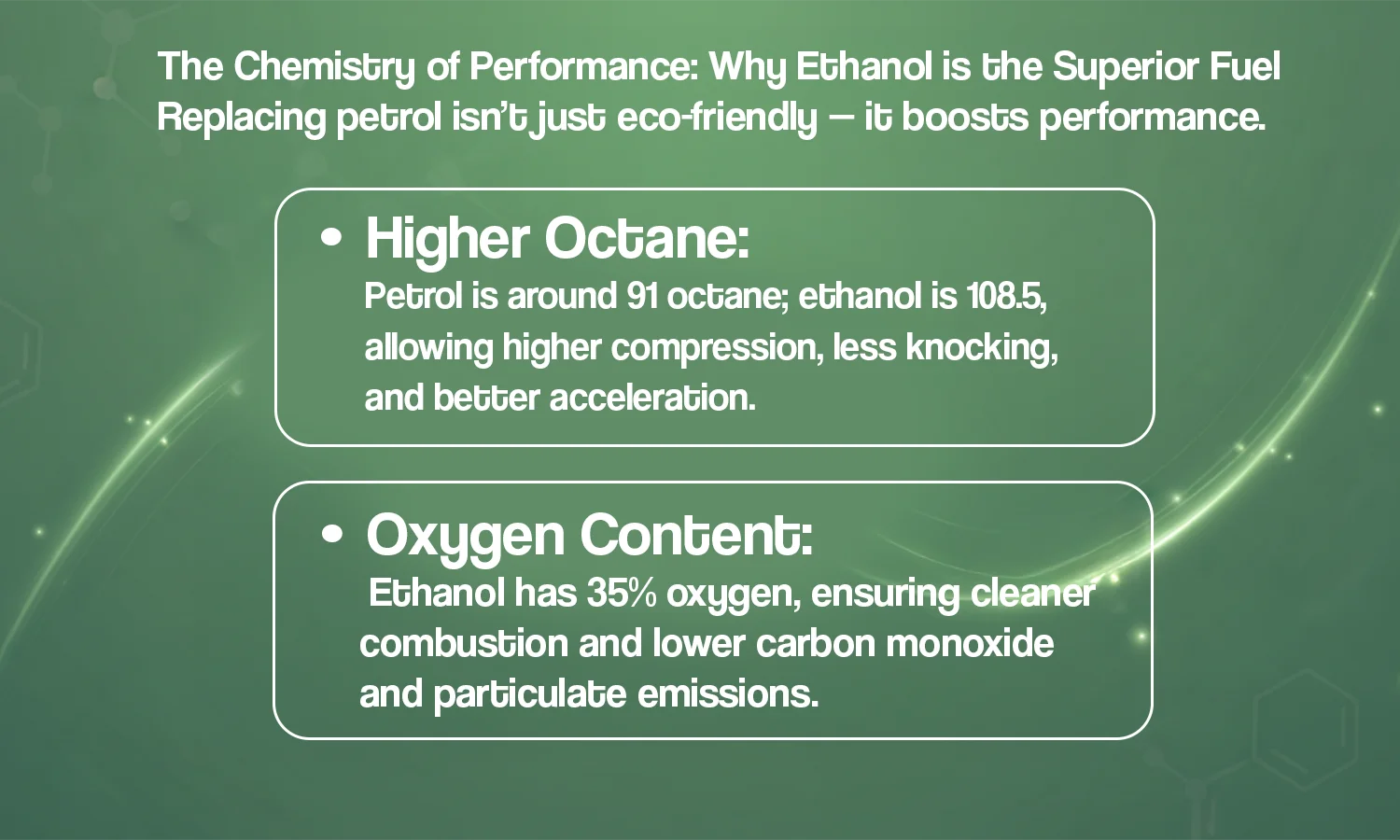
♦ 35percentage Oxygen Content: Unlike pure petrol, ethanol contains inherent oxygen. This leads to more complete combustion, drastically cutting tailpipe emissions of carbon monoxide and particulate matter.
3. Energy Sovereignty: Cutting the $137 Billion Cord
Indias dependence on imported crude, currently between 88percentage and 91percentage, is a strategic vulnerability. In FY2025 alone, the oil import bill hit roughly USD 137 billion approx. ₹11.5 lakh crore.
♦ Foreign Exchange Shield: Since 2014, the Ethanol Blended Petrol EBP program has already saved India over ₹1.36 lakh crore.
♦ Economic Stability: By producing our fuel domestically, we insulate the Indian consumer from global flashpoints and geopolitical shocks that cause petrol prices to spike overnight.
4. Feedstock Revolution: Protecting Food Security
A common concern is whether fuel will compete with the food plate. At AIDA, we are leading the transition to Second-Generation 2G Ethanol:
♦ From Grains to Waste: We are shifting production from food-grade crops to maize, broken rice, and agricultural residues like rice husks and corn cobs.
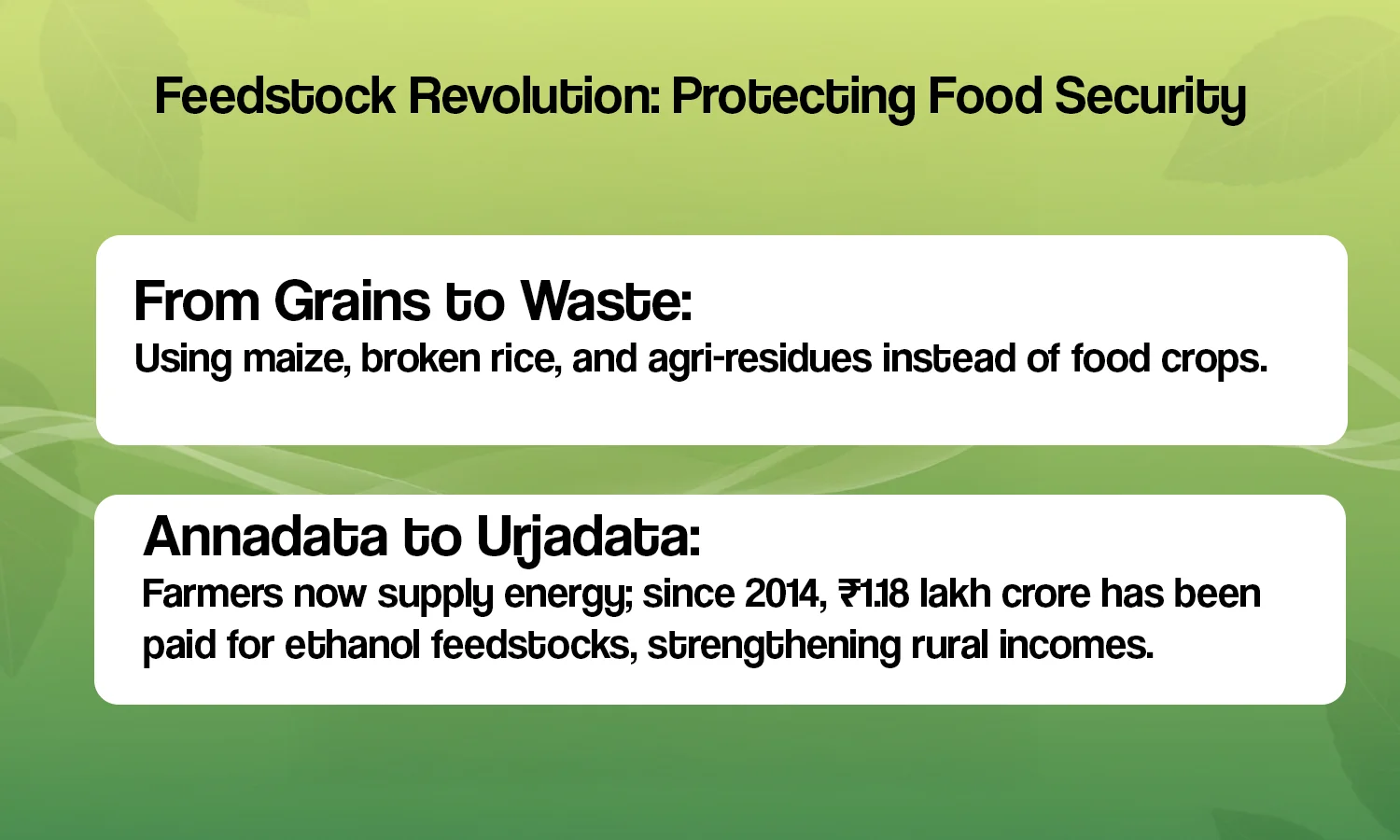
♦ Annadata to Urjadata: This shift transforms the Indian farmer from a food provider into an energy provider. Since 2014, over ₹1.18 lakh crore has been disbursed directly to farmers for ethanol feedstocks, revitalising the rural economy.
5. The Diesel Frontier: The 40percentage Challenge
Petrol replacement is only the beginning. Diesel accounts for 40percentage of India's total fuel consumption. AIDA President Vijendra Singh recently highlighted the next major breakthrough: Isobutanol and Ethanol-Diesel ED95 blending. By exploring pathways to blend ethanol into the diesel pool, we can tackle the heaviest part of India's import bill and move closer to a truly Net Zero transport sector.